Chaint Afrique, in collaboration with Healthy Seas, Access Bank, and LABEC, has launched the Plastic-Free Estuary Programme under the campaign “Tidy Creeks – Healthy Seas.”
The maiden cleanup at the Winneba Estuary mobilized 82 volunteers who successfully collected one ton of waste 60% of which was plastic.
The initiative marks a major step toward tackling marine litter, promoting youth and women’s involvement in coastal stewardship, and supporting Ghana’s Blue Economy ambitions.
It aligns with Sustainable Development Goal 14: Life Below Water, through community-driven environmental action.
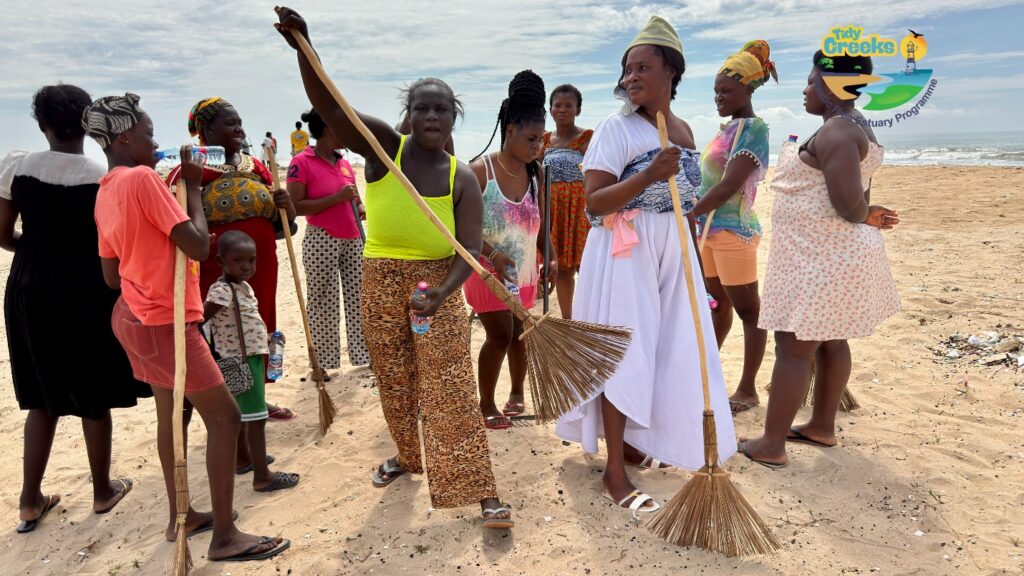
A Cleanup That Sparked a Movement
The event began at dawn, with volunteers grouped into five teams, each assigned a stretch of the estuary. From sachet plastics to polystyrene, nothing escaped the determined hands of the participants. By mid-morning, piles of sorted recyclables stood as proof of what teamwork and purpose can achieve.
The Director of the Fisheries Commission in Winneba, Nettesheim Kwame Damoah applauded the initiative, calling it “a timely intervention” to protect the ecosystem that sustains local livelihoods. Access Bank representatives echoed similar sentiments, emphasizing that sustainability thrives when private and civil actors work hand in hand.
Key Achievements
- 82 volunteers mobilized—exceeding the original target of 75
- 1 ton of waste collected, with 60% plastics and polymer-based materials
- Strengthened partnerships among local institutions and private sector actors
- Raised awareness on recycling, waste management, and ocean protection
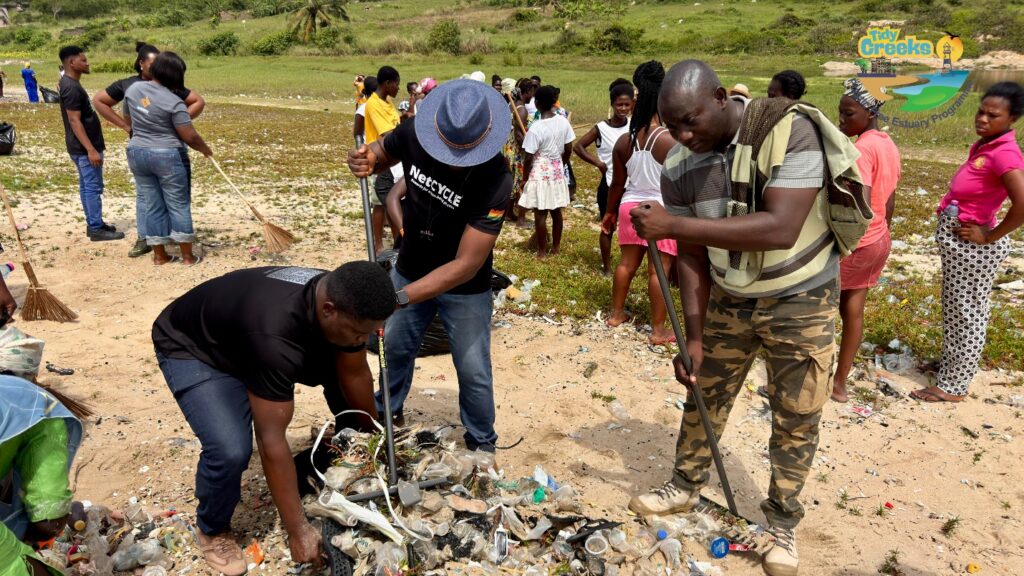
Community Spirit Meets Climate Action
Beyond the cleanup, the day fostered youth leadership, gender inclusivity, and community ownership. Women and young people took leading roles in coordinating teams and sorting waste, embodying the project’s spirit of inclusivity and empowerment.
The exercise also strengthened Chaint Afrique’s growing network of partners committed to Ghana’s Blue Economy vision a future where clean waterways, sustainable fisheries, and climate resilience coexist.
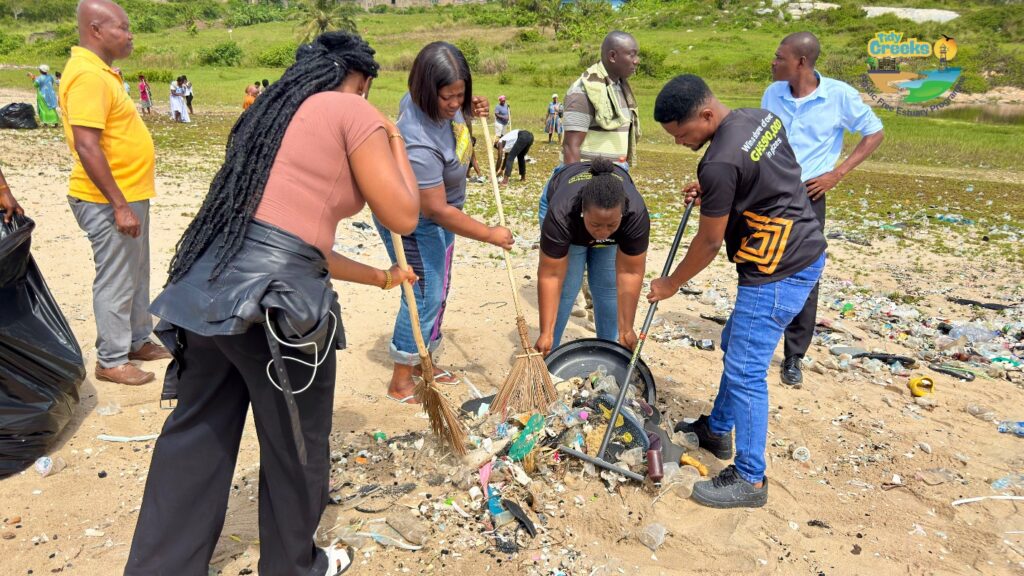
Lessons from the Shoreline
Organizing such a large-scale cleanup wasn’t without challenges logistical constraints and traditional restrictions limited full coverage of the estuary. But for the Chaint team, these were lessons, not setbacks. “The enthusiasm from the volunteers was overwhelming,” said one organizer. “It proved that communities are ready to act when they’re engaged meaningfully.”
What’s Next for Tidy Creeks
Phase 2 of the Plastic-Free Estuary Programme will extend the cleanup upstream into six communities over 100 kilometers, focusing on sensitization, youth engagement, and long-term waste management practices. Plans are also underway to produce a community toolkit on estuary management and to partner with schools for sustained environmental education.
Join the Tidy Creeks Movement and help keep Ghana’s coasts plastic-free.
Partner with Chaint Afrique to support cleanup campaigns, sponsor recycling drives, or volunteer at upcoming estuary projects.
Together, we can build a plastic-free, resilient coastal future.
Learn more or get involved at : www.chaint.org